Dexter's Laboratory (1996): A Genius and His Sister
A boy genius guards his secret lab from his sister and rival, but the real story is about isolation clashing with family life.
November 12, 2026
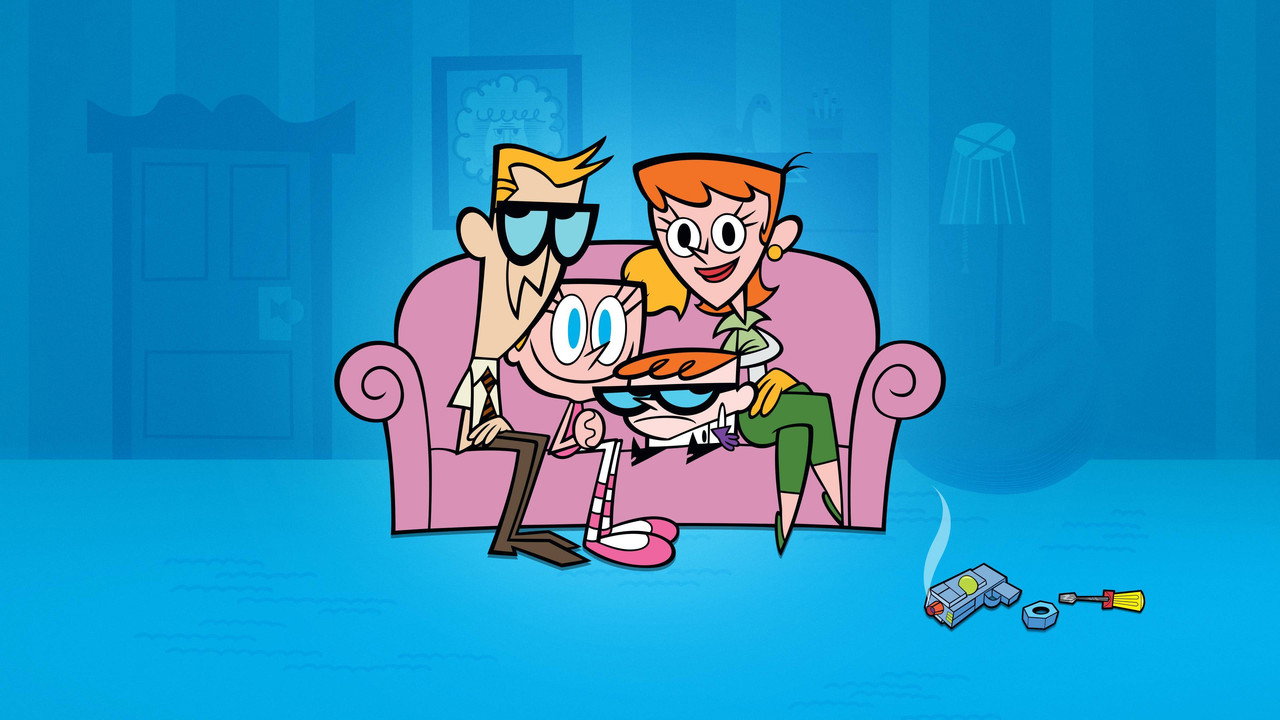
What the Film Is Really About
On its surface, this animated series follows a boy genius who guards a secret lab from his nosy older sister and a scheming neighbor. Look closer, though, and the show is really a study of two things that rarely sit comfortably together: brilliant isolation and messy, unavoidable family life. Dexter builds walls, passwords, and robots to protect his world, and Dee Dee walks through all of it as if none of it exists. That tension is the engine of the whole show, and it is why the series keeps rewarding a second look decades after it first aired.
If you are wondering what is Dexter's Laboratory about beyond the slapstick, the answer sits in that collision. It is a comedy about a kid who wants total control and a sister who represents everything control cannot account for. Every invention, every rivalry, and every exploded experiment circles back to that idea.
The Ideas Behind Dexter's Laboratory
The most productive way into a Dexter's Laboratory analysis is to treat the lab itself as a symbol. It is a private kingdom built by a child who trusts machinery more than people. The house above it is ordinary; the world below is extraordinary. That vertical split mirrors how a gifted kid often experiences childhood, with a public self that follows rules and a hidden self that runs at full speed. The show never lectures about this, but the architecture says it plainly.
Then there is Dee Dee. She is not a villain, and that matters. She is chaos without malice, the force that proves a perfect system is a fragile thing. Her intrusions read as sabotage to Dexter, but to the audience they look like connection. The series quietly argues that the parts of life we cannot engineer are the parts that keep us human.
Mandark completes the triangle. He is Dexter's mirror: another brilliant child, but one whose intelligence curdles into resentment. Where Dexter's rivalry with Dee Dee is domestic, his rivalry with Mandark is existential. The show uses the pair to explore the difference between wanting to be smart and wanting to be superior, and the Dexter's Laboratory Dee Dee and Mandark dynamic shows how both relationships test the same flaw in the hero: his refusal to accept that he cannot control everything.
The broader Dexter's Laboratory themes cluster around family, ego, and the cost of secrecy. The boy genius archetype usually gets a triumphant arc. Here the genius is routinely humbled, usually by someone who loves him and does not care about his equations.
Genre Roots and Influences
The series draws on a long cartoon tradition of the child inventor, a figure that stretches back through mid-century animation and comic strips. It also borrows from the mad-scientist comedy playbook, complete with bubbling flasks, robotic helpers, and a hidden entrance behind a bookshelf. What separates it from its influences is tone. The show is loud and kinetic, but its jokes are built on character logic rather than random gags.
Its sci-fi and fantasy elements are playful rather than speculative. Robots, ray guns, and dimensional mishaps exist to create problems for a kid who thinks he has solved everything. In that sense the genre trappings are a delivery system for the real subject: the gap between a plan and reality.
The sibling dynamic places the show in a proud lineage of family comedies where the real conflict is under the same roof. Viewers who enjoy that energy often find a similar spark in The Patrick Star Show, which shares the same affection for absurd household chaos. And anyone drawn to stories about young people growing into their own power should look at Avatar: The Last Airbender, a series that takes that theme seriously without losing its sense of humor.
Why Dexter's Laboratory Matters Now
Contemporary kids' animation is full of clever, self-aware shows, and this one helped normalize that. It treated its audience as smart enough to follow rapid-fire visual gags and to notice that the hero was often the butt of the joke. The Dexter's Laboratory meaning has only sharpened with time: in an era of relentless optimization, a character who tries to systematize his entire life and still gets outsmarted by a cheerful sibling feels more relevant than ever.
There is also something quietly humane in how the show handles its genius. Dexter is never punished for being smart. He is punished for believing smartness exempts him from being a brother. That is a mature idea dressed in cartoon clothing, and it is why the series holds up for adults revisiting it as much as for children discovering it.
Dexter's Laboratory: The Bottom Line
This is a series that works on two levels at once. Kids get the chases, the robots, and the gleeful destruction. Older viewers get a compact meditation on control, family, and the limits of intelligence. It is not a heavy show, and it is not trying to be. But its best episodes leave you with a simple takeaway: the things worth protecting are rarely the things you can lock away.
For a cartoon built around a boy who skips grades while his sister just skips, the emotional math is surprisingly precise. The lab is the dream, the family is the reality, and the comedy lives in the space between them.
Dexter's Laboratory Summary
A boy genius runs a secret laboratory beneath his family home and spends his days defending it from his sister Dee Dee and his rival Mandark. Blending animation, comedy, and sci-fi fantasy, the series uses inventions and sibling warfare to explore bigger ideas about ego, privacy, and connection. It remains a sharp, funny, and unexpectedly thoughtful piece of television.