Infirmary (2026): When a Workplace Becomes a Maze
Infirmary (2026) centers on a guard who vanished on his first night at a disused psychiatric hospital, where bodycam footage captures unexplainable incidents.
October 15, 2026
What the Film Is Really About
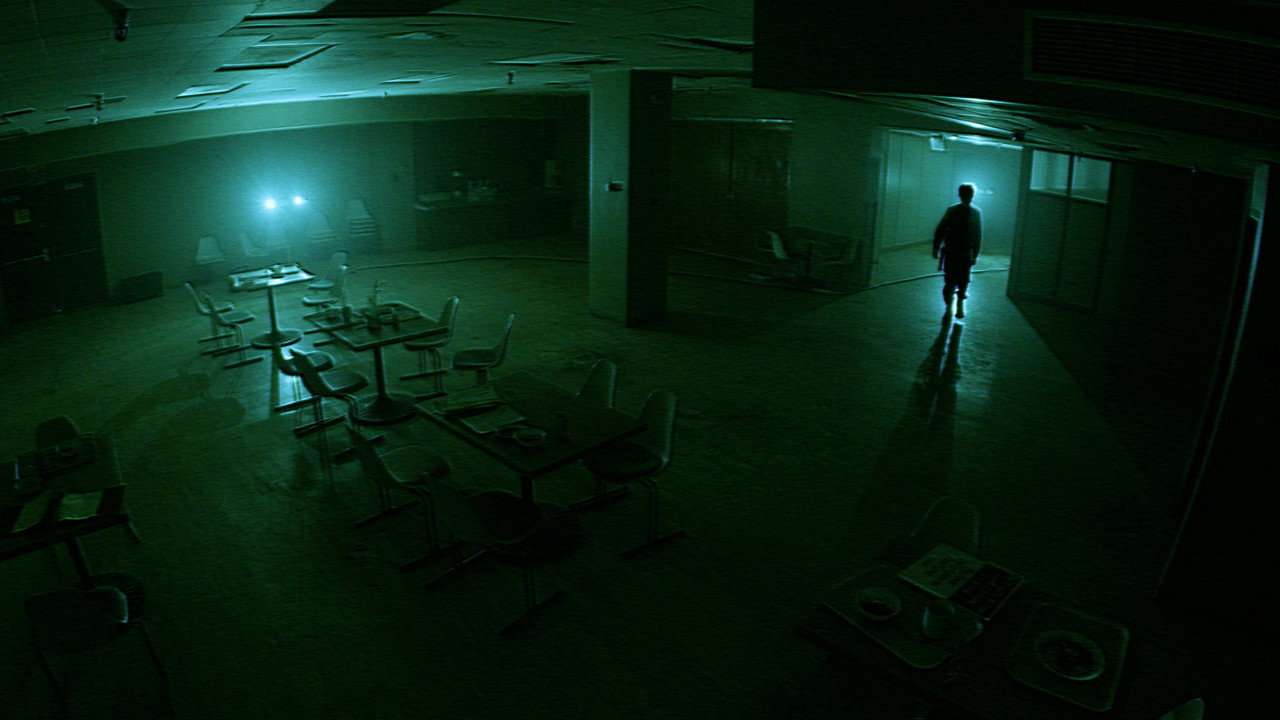
At first glance, the premise seems familiar: a guard disappears during his first night in a disused psychiatric hospital, and the recovered footage turns an ordinary security shift into an unsolved case. Yet the film is less interested in a monster reveal than in the experience of being watched by a place. What is Infirmary about, ultimately, is the collapse of institutional order—the moment a building stops being a workplace and becomes a maze that answers human movement with repetition, cold air, and silence.
The title itself carries that idea. A hospital ward is supposed to be a site of care and classification, but here it has outlived its purpose. Corridors no longer lead anywhere useful, and the camera can no longer trust the evidence it collects. That tension between documentation and confusion gives the film its emotional shape.
The Ideas Behind Infirmary
The strongest Infirmary themes emerge from power and visibility. The bodycam is not neutral: it is an instrument of surveillance attached to a worker with almost no authority. When the hospital turns that instrument back on him, the film stages a quiet argument about who is permitted to look and who is forced to disappear. The vanished guard becomes both witness and casualty, recorded but not understood.
Memory is another thread. The psychiatric hospital was designed to sort people into categories—patient, staff, threat, case file—and those categories remain long after the doors close. The labyrinthine layout preserves that logic in architectural form. Rooms repeat. Angles mislead. The bodycam keeps moving forward while the building keeps erasing the difference between progress and entrapment. In this sense, the film uses liminal space not as an aesthetic trend, but as a theory of institutions: places can continue to enforce rules after the people who made those rules are gone.
There is also something deliberately pathetic in the traditional literary sense. The guard is not a hero. He is underprepared, isolated, and ultimately small against the machinery around him. That choice matters because it removes the comfort of competence. The horror does not come from knowing exactly how to fight back; it comes from realizing the environment was never designed to let anyone win.
Genre Roots and Influences
The film belongs to a long found-footage lineage, but it recombines familiar pieces rather than inventing new ones. The bodycam format gives the story procedural credibility, while the abandoned hospital setting borrows from urban exploration and haunted-asylum traditions. What distinguishes it is the refusal to over-explain. The camera glitches, loses reference points, and captures events that investigators cannot classify. That restraint keeps the mystery intact.
Its kinship with earlier work is easy to trace. Viewers who appreciate the medical and familial deterioration in The Taking of Deborah Logan will recognize a similar interest in recording as both proof and denial. The slow turn from documentation to possession in POSSESSED offers another useful comparison, particularly in how the lens becomes a witness that cannot intervene. Neither comparison suggests the film surpasses those titles; rather, it shows how the same grammar can be applied to a different institutional nightmare.
There is also a colder, more atmospheric horror mode that shares some of its DNA, such as The Coldness. Where that film often builds unease through isolation and mood, Infirmary locates dread in architectural repetition. The camera is mobile, but the building makes that mobility meaningless.
Why Infirmary Matters Now
The film arrives at a moment when audiences are unusually fluent in images of labor captured on cameras: delivery routes, security shifts, body-worn evidence, livestreamed crisis. That context sharpens its horror. The Infirmary bodycam incidents feel plausible not because they are explained, but because they resemble the fragmented footage people already encounter online—cropped, unstable, and stripped of context. The mystery is not only what happened in the hospital, but how anyone is supposed to interpret a record that cannot account for itself.
This is where a careful Infirmary analysis becomes more than genre bookkeeping. The film quietly asks whether modern institutions have replaced ghosts with systems. If a guard can vanish inside a building designed to observe, classify, and contain, then the haunting is administrative as much as supernatural. The afterlife of the hospital is a filing system with no one left to read it.
That reading also explains its cultural relevance. Stories about abandoned hospitals have circulated for decades, but the bodycam gives them new urgency. It merges two contemporary anxieties: distrust of official records and fear that the places meant to heal or secure us have become unusable. The film does not resolve those fears, but it gives them a shape.
Infirmary: The Bottom Line
This is not a flawed film. At 85 minutes, it is lean, though some viewers may want a stronger final movement or more fully developed character work. Its rating of 5.4/10 from 18 votes suggests a divided response, and that seems fair for a modest horror entry that prioritizes atmosphere over spectacle. Still, its ambiguity is not the same thing as emptiness. The ending withholds catharsis, but it does not withhold meaning.
What gives the film its lasting charge is the way it treats the hospital as an active force rather than a backdrop. The final ambiguity of Infirmary meaning is not a puzzle box missing its key; it is the logical endpoint of a story about evidence that can no longer be trusted. If you approach it expecting answers, it may feel slight. If you approach it as a study of surveillance, memory, and institutional decay, it becomes considerably more than a night-shift haunting.
Infirmary Overview
- Title: Infirmary (2026)
- Genre: Horror
- Director: Nicholas Pineda
- Runtime: 85 minutes
- Rating: 5.4/10 based on 18 votes
- Premise: A guard disappears on his first night at a former psychiatric hospital, leaving bodycam footage that investigators cannot fully explain.
- Main cast: Paul Syre, Mark Anthony Williams, Danielle Kennedy, Corinna Wagner-Smith
For viewers drawn to psychological horror, institutional dread, and found-footage tension, the film offers a compact but unsettling experience. It rewards attention to space, sound, and the limits of the camera eye.