Love of Your Life (2026): When Happily Ever After Breaks
Rachel Morrison's 2026 romance follows Maya as a chance meeting leads to love, loss, and an unexpected path back to living.
October 15, 2026
What the Film Is Really About
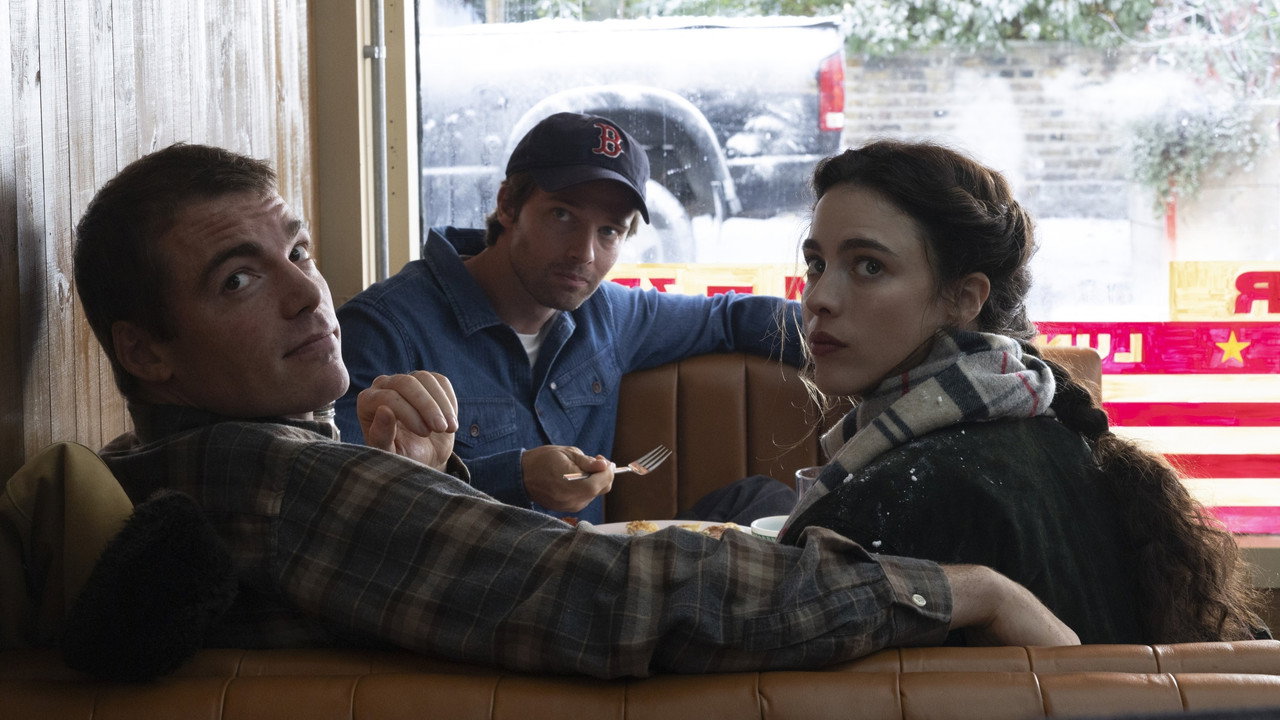
On the surface, Rachel Morrison's 2026 feature follows a familiar arc: two people meet by accident, fall fast, and then life intervenes. But the film is less interested in the meeting than in what comes after it. Maya, played by Margaret Qualley, doesn't get a clean resolution to her happiness — she gets it broken, and the movie spends most of its 109 minutes watching her decide what to do with the pieces. What is Love of Your Life about, then? Not courtship. It's about the aftermath of losing the person who made the future feel settled, and the strange, unglamorous work of rebuilding a self that no longer has a witness.
The title itself is doing quiet work. It reads like a promise, but the film treats it more like a question — whose life, whose love, and what happens when the answer changes without your consent. Morrison resists the urge to make grief tidy. The romance in the first act isn't a reward; it's the setup that makes the loss feel like a structural collapse rather than a plot twist.
The Ideas Behind Love of Your Life
There's a version of this story that would treat widowhood as a single emotional beat — cry, heal, move on, roll credits. Morrison doesn't take that route. Instead the film keeps circling the idea that moving on isn't a betrayal of the person you lost, and it isn't a clean break either. Maya carries her husband forward; she just has to figure out what that looks like in practice. The Love of Your Life themes
sit right at that intersection — loss, identity, and the awkward process of learning to want things again.Supporting turns from Aaron Pierre, Patrick Schwarzenegger, and Catherine Keener suggest the film is built as a network of relationships rather than a two-hander. That matters thematically. Grief in isolation becomes navel-gazing; grief surrounded by other people becomes a negotiation. Maya's journey isn't a solo montage, it's a series of re-entries into a world she didn't choose to rejoin.
It's worth reading a Love of Your Life analysis
— or writing one — that takes the film's structure seriously rather than its premise. The non-linear feel of the emotional timeline, the way scenes of warmth are interrupted by absence, is not stylistic noise. It's the film's argument that memory doesn't arrange itself politely.Genre Roots and Influences
Morrison is working in a long tradition of American melodrama that treats grief as a legitimate dramatic engine rather than a plot device. Think of The Straight Story, where a slow physical journey carries the whole emotional weight, or Mystic River, which understands that loss reshapes everyone in its orbit, not just the person left behind. Neither is a direct reference point here, but both share the conviction that what happens to people after the event is more interesting than the event itself.
What's distinctive about this film is its willingness to hold romance and grief in the same frame. Most genre entries pick one lane. A Love of Your Life 2026 love story
that also functions as a study of bereavement is doing more than mixing categories — it's arguing that romantic love is only legible once you understand what it costs to lose it.The casting points in the same direction. Qualley has built a career on characters who are internally coiled, and pairing her with a supporting ensemble of this caliber — Tamara Lawrance, Gabriel Basso, Corey Johnson, Michael Shelford — suggests Morrison wants texture, not star wattage.
Why Love of Your Life Matters Now
There's a cultural appetite right now for stories that don't pretend grief is a season you graduate from. Streaming has flooded audiences with tidy romantic resolutions, and a film that sits with uncertainty instead is quietly countercultural. The Love of Your Life meaning
shifts depending on where you're standing when you watch it — a romance to one viewer, a study of survival to another. That ambiguity isn't a flaw in the film's construction. It's the point.Morrison also seems aware that audiences are tired of being told what to feel on a schedule. The film's restraint, and its refusal to score every emotional beat, respects the viewer enough to leave room for their own associations. That's rarer than it should be.
How Good Is Love of Your Life, Really?
The early numbers put it at a modest 6.607 out of 10 across 14 votes — not enough to call it a consensus, and not a figure that tells you much on its own. What the film offers is a coherent voice: a director with a clear thematic intention, a lead performance built to carry weight, and a supporting cast that gives every scene an edge of unpredictability. Where it may struggle is pacing, since films that prioritize interiority often trade momentum for depth, and 109 minutes leaves little room for both.
If you like your romances unresolved, and your dramas more curious than conclusive, this one earns its runtime. If you need the emotional math to add up by the final scene, it may leave you colder than you'd like.
Love of Your Life in Short
A film about what remains after the love story ends, carried by Qualley and shaped by Morrison's refusal to simplify loss. It works best when watched as an essay on moving forward rather than a conventional romance, and its ambitions are clearer than its early reception suggests.