Mutiny (2026): One Man's Crusade Against a Global Conspiracy
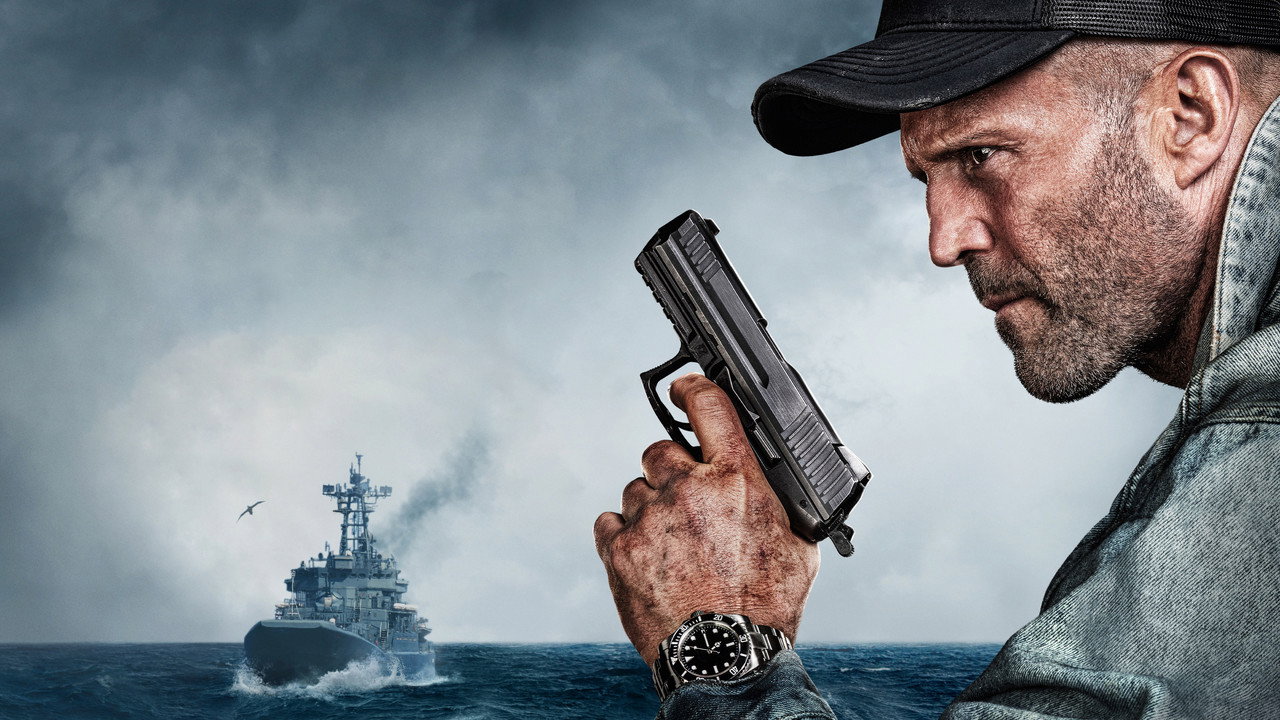
After being framed for his boss's murder, Cole Reed takes his revenge aboard a cargo ship and uncovers a global conspiracy.
October 25, 2026
What the Film Is Really About
At first glance, the narrative follows a man who boards a freight vessel after being wrongly accused of killing his employer, but a thematic reading exposes a tighter preoccupation with isolation and moral reckoning. The cargo ship functions as a floating prison where Cole Reed must confront not only hired enemies but the silence of a system that discarded him. Rather than a simple vengeance arc, the story probes how a single individual absorbs the weight of an international conspiracy. The tagline about blood in the water signals a predatory environment where survival demands shedding civilized restraint. Jean-François Richet uses the limited 96 minute runtime to keep the pressure constant, letting the metal corridors stand in for a world that has turned hostile to the ordinary worker.
Revenge here is less a motivator than a lens. We watch a framed employee transform into a self-appointed judge because official channels have collapsed. The billionaire boss’s murder is not just a plot hook; it represents the fragility of power that floats on global shipping lanes. By staging the climax on a container hauler, the film turns mundane commerce into a battleground for accountability. This is why a surface description fails to capture the movie’s engine. Themes of conspiracy and solitary resistance echo through every enclosed shot, suggesting that modern thrills rely on shrinking the playground until only two wills remain. The one man army trope becomes a metaphor for personal agency in a globalized age.
The Ideas Behind Mutiny
The central concept revolves around the myth of the one man army, but the script questions whether such a figure can ever reclaim justice or merely perpetuate violence. Cole’s crusade is framed by betrayal, and the audience is invited to weigh his actions against the larger network that engineered the framing. Water becomes a recurring symbol: it separates, hides, and eventually reveals. The phrase “there’s blood in the water” is not only a warning to characters but a comment on predatory capitalism where weaker entities are circled by sharks with ledgers.
Viewers who appreciate retributive storytelling may find kinship with earlier works such as Queen Bee's Revenge, which also places personal settlement above legal process. Both films understand that revenge is a language spoken when institutions go mute. Yet Mutiny pushes further by tying the personal grievance to a sprawling plot that reaches beyond the ship’s rails. The supporting ensemble, including Annabelle Wallis and Adrian Lester, give the conspiracy texture, implying that the true antagonist is not a single villain but a faceless arrangement of interests. Roland Møller adds weight as part of the crew that embodies the cost of silence.
Genre Roots and Influences
To appreciate the lineage, one must look at the cold efficiency of 1970s conspiracy thrillers and the muscular solitude of 1980s action cinema. Richet’s direction borrows the unglamorous tension of European crime films while allowing Jason Statham to perform the terse physical choreography that defines his career. The result is a hybrid: a chamber piece set on ocean waves with the pulse of a manhunt. The film refuses the glossy irony of some contemporary entries, opting instead for a straightforward moral climate where a wronged worker fights a structure.
Students of military conspiracy cinema might pair this with Seal Team Six: The Raid on Osama Bin Laden, a dramatization that also examines hidden operations beneath official history. Though the tones differ, both pictures treat secrecy as the principal enemy. Mutiny’s cargo ship is a microcosm of the geopolitical shadows explored in that earlier work. Arnas Fedaravičius and Jason Wong appear among the operatives who exist outside public view, reinforcing the genre’s fascination with unseen hands steering events. The 96 minute format keeps the homage tight rather than sprawling.
Why Mutiny Matters Now
Cultural context explains the film’s resonance. In an era when trust in large institutions sits low, a story about a framed employee taking the helm speaks to widespread anxiety. The billionaire class appears alternately vulnerable and culpable, mirroring headlines about unequal accountability. Global shipping, often invisible to consumers, becomes the perfect stage for a tale about threads connecting distant corruption. The pandemic years taught audiences about supply chain fragility, and the movie exploits that awareness by stranding its conflict on a vessel that carries the world’s goods.
For those tracking modern isolation narratives, Off the Grid offers a complementary view of individuals severed from systemic support. Where that story explores withdrawal, Mutiny forces engagement with the mechanism that wronged its hero. The 2026 release thus arrives as a capsule of contemporary unease: we suspect the conspiracy, we fear the frame, and we cheer the lone stand because it mirrors our own desire for agency. Chaneil Kular rounds out a cast that feels like fragments of a disordered world. The cargo ship setting mirrors the enclosed spaces many endured during periods of separation.
Our Take on Mutiny
This Mutiny review finds the picture more satisfying than several recent vehicles built around the same lead. The difference lies in a script that actually supports its action: antagonists possess clear motives, and the supporting players earn investment. Statham delivers his customary efficient physique work, but here he is backed by a functioning narrative rather than repetitive set pieces. The rating of 7.613 from 939 votes suggests viewers agree that the thriller lands its beats. At 96 minutes, it respects attention spans while still allowing the conspiracy to unfold with patience. Annabelle Wallis and Adrian Lester provide anchors amid the chaos, and Ramon Møller’s presence adds grit.
Mutiny Summary
In the end, Mutiny 2026 stands as a compact action thriller that uses a confined setting to amplify themes of betrayal and resistance. Directed by Jean-François Richet, it condenses revenge, conspiracy, and one man’s stand into a tight 96 minute experience. The tagline “there’s blood in the water” pervades each scene, reminding us that the story is as much about predation as justice. With a cast led by Jason Statham and supported by Annabelle Wallis, Roland Møller, Arnas Fedaravičius, and others, the movie achieves a balance between spectacle and story. It may not reinvent the genre, but it provides a thoughtful entry for those willing to look past the surface.