Never Surrender (2026): Guilt and Survival Under Siege
A guilt-ridden veteran and his estranged grandchildren must unite to survive when a deadly gang descends on their remote home in Never Surrender (2026).
November 15, 2026
What the Film Is Really About
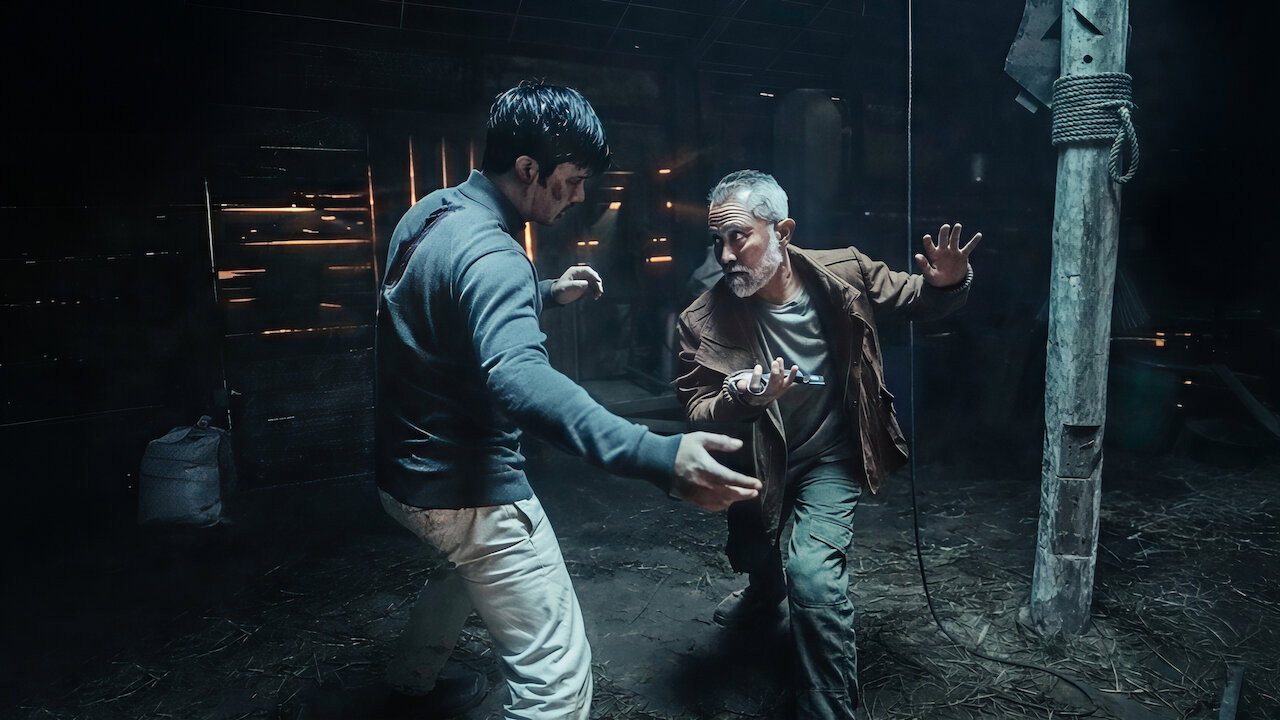
At first glance, Never Surrender looks like a straightforward siege picture: a gang arrives, a house becomes a fortress, and violence follows. But the film keeps nudging the viewer toward something quieter underneath the gunfire. The remote home is less a battlefield than a holding cell for unresolved guilt. The veteran at its center has spent years carrying the weight of something he cannot undo, and the grandchildren who show up barely know him. When the criminals arrive, they do not create the tension so much as expose it. If you are wondering what is Never Surrender about beyond its premise, the answer sits in that overlap: the siege is external, but the real confrontation is between a man and the family he let drift away.
The movie uses the geography of the house deliberately. Every locked door and blind corner mirrors an emotional wall that has never been taken down. The gang is a pressure mechanism, not the point. Their presence forces three people who share blood but not history to finally speak to one another, and the screenplay treats those exchanges with as much care as the action beats.
The Ideas Behind Never Surrender
Much of the film's intelligence lives in its details. The use of sign language is the clearest example: communication becomes a survival tool, which quietly argues that being understood is itself a form of protection. Characters who cannot hear the danger coming learn to read it instead, and the film treats that skill with real respect rather than as a gimmick. The elderly protagonist matters too. He is not a superhero, and the film's one-person-army moments are grounded in his history rather than in invincibility. Experience, not youth, is the weapon here.
Those ideas form the core of the Never Surrender themes the film keeps circling: inheritance, guilt, and the difference between protecting someone and controlling them. The veteran's attempts to shield his grandchildren risk repeating the same distance that broke the family apart in the first place. Meanwhile, the criminal syndicate functions as a kind of mirror — an organization built on loyalty that has curdled into coercion. The film contrasts two versions of "family," one chosen and repaired, the other enforced and rotten.
Symbolism carries a lot of the load. The remote location reads as isolation made physical, and the house's slow transformation into a defensive position suggests that safety has to be built, not inherited. Any serious Never Surrender analysis has to acknowledge how rarely the film lets violence be purely exciting; the action is usually followed by exhaustion, silence, or a look between two people who have just understood each other a little better. Viewers who appreciate crime pictures that treat their characters as people rather than targets might also enjoy The Killer, which shares a similarly patient interest in the interior life of a professional.
Genre Roots and Influences
The director, Sidharta Tata, is working squarely inside the home-invasion thriller tradition, a lineage that stretches from siege westerns through the lean urban survival films of the seventies and eighties. The template is familiar: a fixed location, a closing perimeter, a small group forced to improvise. What distinguishes this entry is the emotional framing. Where many films in the subgenre treat the family as hostages to be rescued, this one treats the family as the actual subject, with the criminals serving as the catalyst that finally forces a conversation.
There is also a distinct crime-syndicate thread running through the middle act. The gang is not anonymous; it has hierarchy, procedure, and a business logic that makes it feel like a smaller version of the world outside the house. That doubling is where Never Surrender movie symbolism becomes most pointed — the home invasion narrative becomes a story about institutions that claim to protect people while consuming them. Fans of bleak, methodical crime storytelling may find a useful companion piece in The Last Days of American Crime, another film interested in what organized criminality says about the society that produces it.
The pacing reflects its 140-minute runtime. Tata lets scenes breathe, particularly early on, so the eventual escalation lands with more force. It is a slow-burn structure rather than a sprint, and the film trusts the audience to sit with discomfort before the payoff arrives.
Why Never Surrender Matters Now
The film arrives at a moment when stories about older people fighting to remain relevant are unusually resonant. The veteran is not portrayed as obsolete or pitiable; he is portrayed as someone whose value the world around him has stopped noticing. That is a cultural argument as much as a narrative one. The grandchildren, meanwhile, represent a generation raised on distance — physically present, emotionally elsewhere — and the film treats their gradual re-engagement as genuine growth rather than a sentimental arc.
There is a broader point, too, about the meaning of the title. The Never Surrender meaning is not really about winning a fight. Nobody in this film "wins" in a clean sense. The title is about refusing to let fear or resentment make the final decision — a stance the film treats as harder and more valuable than any single act of violence. In a genre that often celebrates endurance for its own sake, that distinction feels worth making.
For viewers who like survival stories with an emotional spine, Attack on Titan: The Roar of Awakening offers a different register of the same obsession: what people will do when the walls close in.
Final Verdict on Never Surrender
This is a film that respects its audience's patience. At 140 minutes it asks for attention, and it repays that attention with a climax that feels earned rather than engineered. The cast carries the quieter material well, and the direction keeps the symbol-making understated enough that it never becomes a lecture. It is not a perfect film — the middle stretch occasionally loses momentum, and some viewers may want a tighter siege — but its ambitions are clear and largely met. As a thematic piece, it works: the crime plot is the delivery system, and the family is the message.
If you come for the action, you will get it. If you stay for the ideas, you will get more than the premise promises.
Never Surrender Key Details
- Title: Never Surrender
- Year: 2026
- Director: Sidharta Tata
- Genres: Action, Crime, Thriller
- Runtime: 140 minutes
- Rating: 7.068/10 from 22 votes
- Main Cast: Lukman Sardi, Callista Arum, Sulthan Hamonangan, Derby Romero, Donny Alamsyah, Dennis Adishwara, Ismi Melinda, David Hendrawan
- Premise: A guilt-ridden veteran and the estranged grandchildren he barely knows must unite when a deadly gang descends on his remote home.
- Key Themes: Family relationships, survival, criminal syndicates, militarization, an elderly protagonist, sign language as communication and defense